Airborne wood dust isn't just a byproduct of production — it's a serious risk to employee health and shop safety.
Without proper removal, fine particulate can irritate lungs, reduce visibility, create slippery surfaces, and increase long-term respiratory exposure for woodshop teams.
Most shops already run dust collection at the tool. The problem is what the hood doesn't catch — the finest fraction escapes the capture zone, stays airborne for hours, and settles across the shop long after the machine stops.
CleanLeaf units capture wood dust before it recirculates throughout the shop. With high-efficiency filtration and airflow designed for particulate-heavy environments, they help maintain clearer air, protect employee health, and reduce dust buildup on equipment and surfaces.
With proper unit placement, our systems exchange the air in your shop 8-10 times per hour — reducing particulate by up to 99.7% with every pass until the space is performing at its best.
A woodworking shop struggled with airborne dust that lingered in the space despite existing source collection. See how a single OX1100 changed what stayed in the air.
Read the full case studySource collection and ambient filtration solve two different halves of the same problem. Most shops have only one of them.
Coarse dust drops out of the air in seconds. The finest particulate — the part that reaches deepest into the lungs and settles on every surface in the shop — can stay suspended for hours, which is why a shop with good collection at every machine can still be hazy at the end of the day.
Four issues account for most of what a woodshop's air does to its people and its equipment.
The fraction small enough to escape the hood and stay suspended is also the fraction that reaches deepest into the lungs. It's the part collection misses.
Orbital and hand sanding produce the finest particulate in the shop, often at benches with no extraction at all — right where someone is leaning over the work.
Stains, lacquers, and polyurethanes release compounds that hang in the shop long after the coat goes on, especially in enclosed finishing areas.
Dust on the floor makes surfaces slick, dust on machines fouls bearings and switches, and haze in the air makes it harder to see what you're cutting.
CleanLeaf and Blue Ox units hang from the ceiling or structure and run independently of your dust collector — no ductwork, no changes to your existing hoods or blast gates, and nothing taken away from the collection you've already invested in.
Units work together to create a circular air pattern through the shop. As air flows through the high-efficiency filters, particulate is reduced by up to 99.7% per pass — then handed off to the next unit, which reduces it further.
This cycle continues until the space reaches a clean air standard, with the air exchanging up to 8-10 times per hour depending on your configuration.
Running after the tools stop is where much of the value is. The fine fraction stirred up during a working day doesn't settle out when the machines shut off — it keeps circulating. Leaving units running through cleanup and after hours means the shop starts the next morning clear rather than picking up where it left off.
Placement makes the difference. Units positioned to establish a continuous circular pattern pull air across the shop rather than pushing it around a single machine. Key factors include shop square footage, ceiling height, which operations are un-ducted, and where sanding and finishing happen.
Each unit has a specific catch and throw distance that determines optimal spacing. Our team can help you design the right configuration for your shop.
Units cycle air up to 8-10× per hour and keep working after the tools stop — clearing the fine fraction that would otherwise still be circulating when the shop opens tomorrow.
Choose based on shop size and whether finishing happens under the same roof. All models use standard-sized high-efficiency filters to keep running costs low.
For shop floors, machine rooms, and assembly areas where airborne wood dust is the whole problem — the starting point for nearly every woodshop.
Maximum bag filter capacity for the best particle capture at this unit size.
Explore OX1100
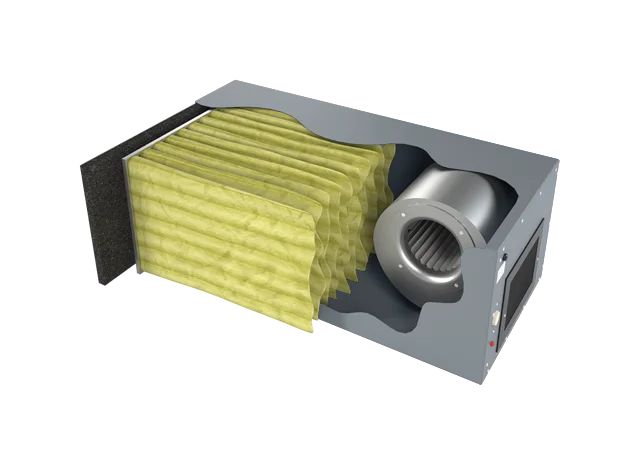
The unit from our woodworking case study, and the right first purchase for most shops. With no carbon or HEPA stage taking up space, it devotes maximum filter area to particulate — and the washable foam pre-filter handles the heavy load a woodshop generates, so the bag filter behind it lasts considerably longer.
T-pattern airflow covering a wide span from a single mounting point.
Explore OX3000
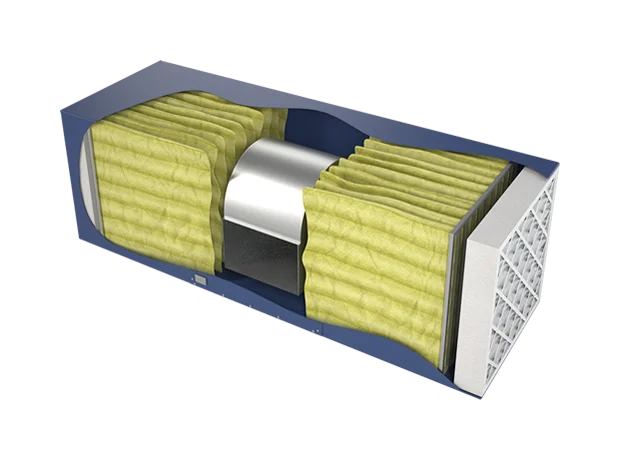
Cabinet shops, millwork operations, and production floors generate dust faster than a single OX1100 can clear it. The OX3000's T-style airflow draws through inlets on both sides and exhausts from the center, covering a wide span from one mounting point, while a dual set of micro-glass fiber filters stretches service intervals under continuous load. Larger mills can step up to the belt-driven OX3500C or the OX4000 and OX4500.
For shops that stain, lacquer, or spray under the same roof as the machines — where the dust problem and the smell problem arrived together.
Bag filter plus a 6 lb. carbon after-filter for dust and finish odor together.
Explore OX1100-CF
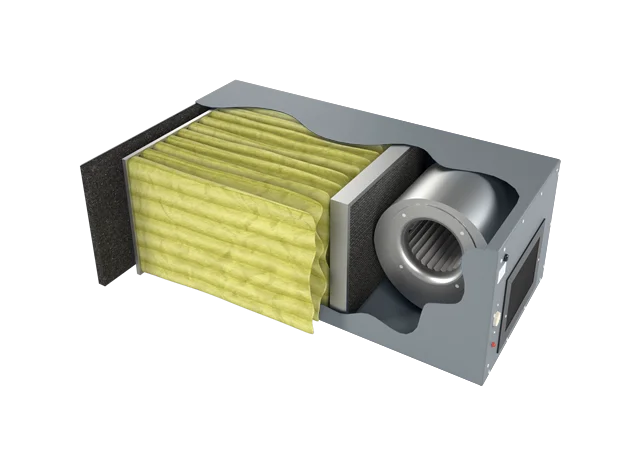
Sanding dust and finish fumes tend to occupy the same corner of the shop. A shortened bag filter makes room for a 6 lb. carbon after-filter, so particulate capture stays effective while the carbon works on stain and lacquer odor in the same pass — one unit over the bench instead of two solutions.
Carbon canister configuration for heavy odor applications.
Explore OX1100-CC
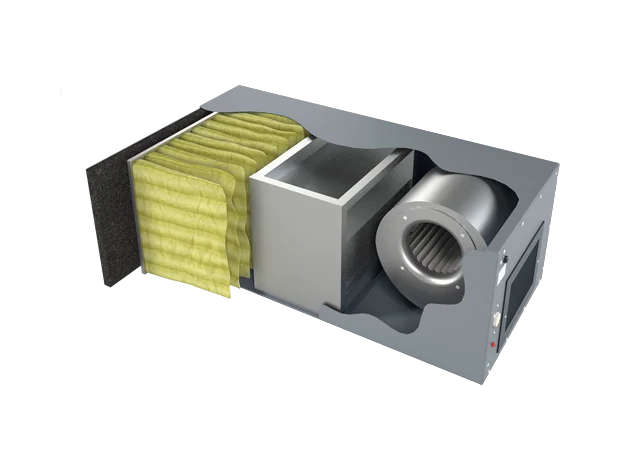
When a 6 lb. after-filter gets overwhelmed, carbon canisters carry substantially more media and hold their capacity longer. This is the configuration for shops spraying daily, running solvent-based finishes, or working in enclosed finishing rooms where the smell has nowhere to go. Larger finishing areas can step up to the OX2500D-CC or CL2500-CFP.
For shops where long-term respiratory exposure is the reason for the project, and for clean assembly or finish-critical areas within the building.
HEPA-led build for the finest particulate in the shop.
Explore OX1100-HE
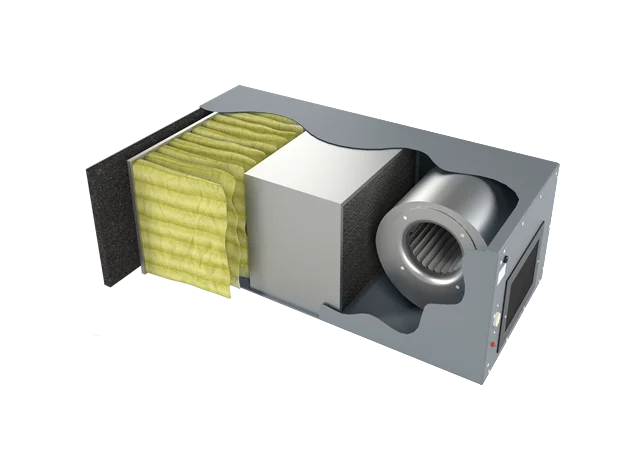
A HEPA final stage captures 99.97% of particles at 0.3 microns — well below the size range that a bag filter alone lets through, and squarely in the fraction that reaches deepest into the lungs. Most shops don't need HEPA across the whole floor; they need it over the bench where someone sands all day, or in a finish-critical assembly area where settling ruins work.
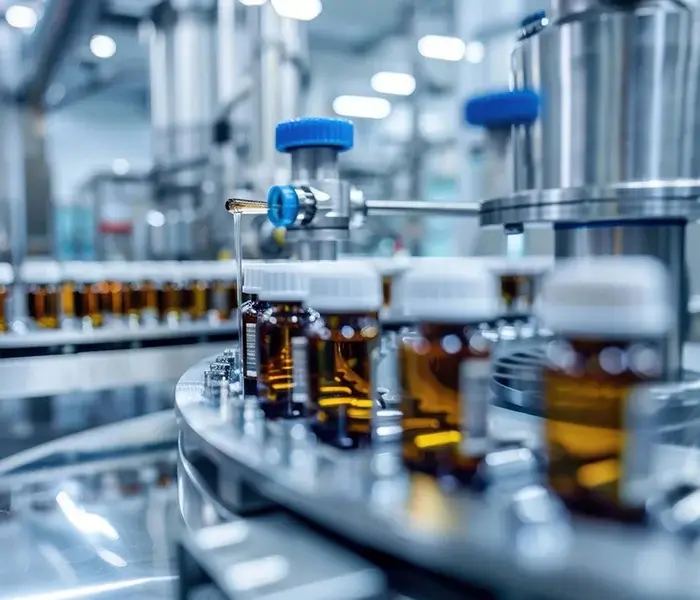
Woodshops are one part of the picture. CleanLeaf covers air quality across manufacturing and warehousing environments too.
Powder, particulate, and process odor control for pharmaceutical, food, beverage, and cosmetic production — protecting product integrity and compliance.
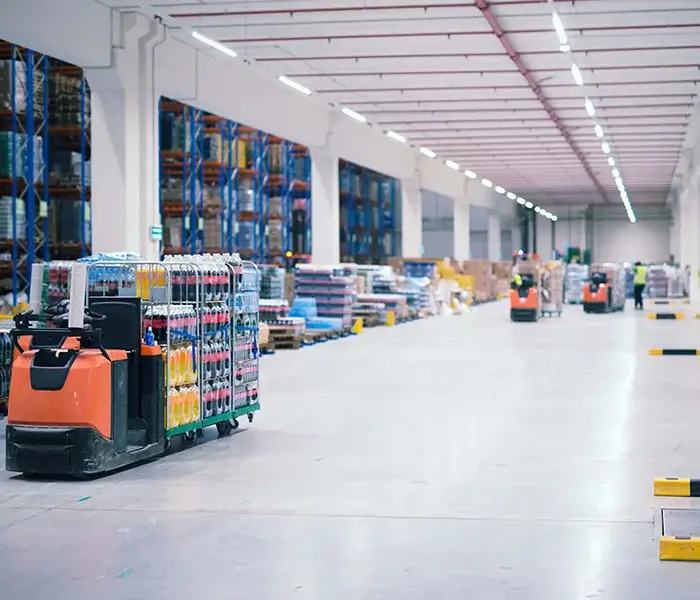
Explore NowForklift exhaust, dock dust, and packaging particulate control for warehouse and storage environments — protecting worker health across long shifts.
Explore NowFind quick answers to the most common questions about our services, solutions, and process.
See All FAQsAir filtration system selection depends on:
• Room size (cubic footage)
• Air changes per hour (ACH)
• Type of contaminants (dust, smoke, mold, odors, VOCs)
• Required filtration level (bag filter %, carbon weight, HEPA, etc.)
Our team evaluates airflow dynamics and contaminant load to recommend a properly sized solution — not just a box with a fan.
Most CleanLeaf and Blue Ox models operate between ~48–66 dBA, depending on airflow setting and unit size.
Lower-speed settings and optional silencers are available for sound-sensitive environments.
Most units are plug-and-play on standard 115V power and include suspension or bracket mounting options.
For larger commercial or industrial applications, we may recommend airflow planning to optimize circulation patterns.
Filter life varies by environment and contaminant load. Typical ranges:
• Pre-filters: 1–3 months
• Carbon media: 6–12 months
• HEPA or high-efficiency bags: 6–18 months
Higher particulate or odor loads may shorten intervals.
Our systems are engineered to capture and control:
• Dust
• Smoke
• Mold and Mildew
• Odors and VOCs
• Fine particulate
Filtration stages may include pleated pre-filters, high-efficiency bag filters, HEPA media, and activated carbon depending on the application.
CleanLeaf offers a 2-year warranty covering defects in materials and workmanship for authorized distributors and end users.
To make a claim, you must get approval first. Approved claims are resolved with a replacement or credit/refund. The warranty is void if the product was misused or used outside its intended purpose.
We also provide ongoing support and access to replacement filters.
If you would like to speak with one of our product experts about our products, pricing, or to get a system estimate, please call or email us using the contact information below. If you want pricing for a specific product or would like to be contacted by a product expert, please use the Request a Quote Form. If you need support with an existing order, please visit the Contact Us page.
Please share a few details below, and a product expert will contact you promptly. To accelerate the process, please provide as much detail about our application as possible (EX: type of contaminant (dust, odor, fumes...), size of your space, ceiling height...).