Air Filtration for Material Storage

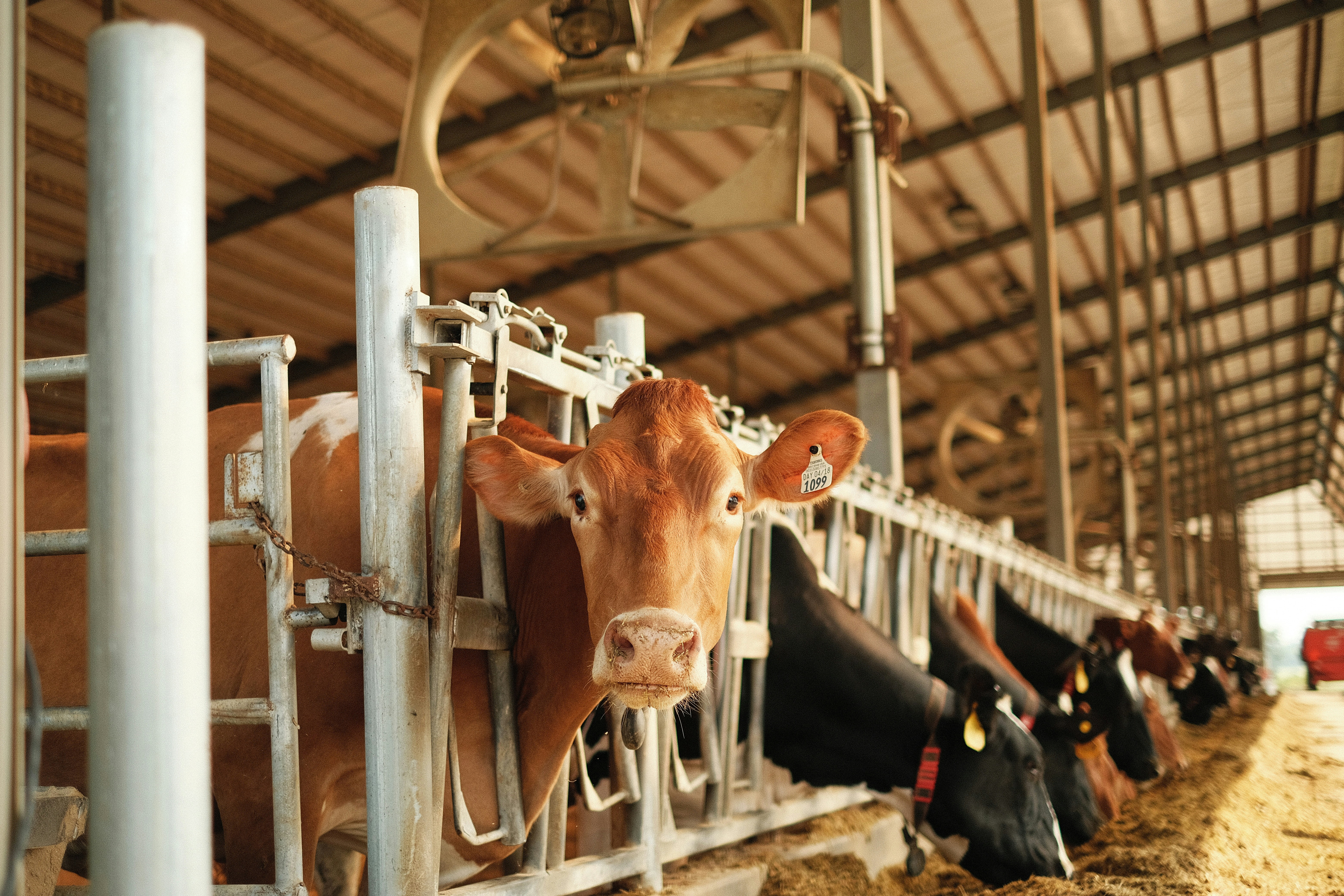
Airborne dust and cross-contaminants can degrade seeds, damage stored materials, and compromise the integrity of sensitive agricultural inputs.

Storage is where time works against you. Inventory sits for weeks or months, and everything suspended in the air has that entire period to settle onto it. A load light enough to ignore over a shift is a different problem over a season.

CleanLeaf systems control airborne particulates and help stabilize indoor air conditions — protecting valuable inventory and reducing the risk of contamination or material loss.

With proper unit placement, our systems exchange the air in your building 8-10 times per hour — reducing particulate by up to 99.7% with every pass, in buildings that often have no air treatment at all.

What Reaches Your Stored Inventory

Storage buildings look static, but the air in them isn't. These four are how contamination gets to material that's just sitting there.

Particulate

Traffic & Handling Dust

Forklifts, pallet movement, and loading raise settled dust back into the air with every pass — putting it right back onto everything in the building.

Infiltration

Dock Doors & Outside Air

Open doors bring field dust, pollen, and road grit straight in. In most storage buildings there's nothing between that air and your inventory.

Biological

Mold & Fungal Spores

Spores landing on stored seed and organic material wait for the moisture to arrive. Long dwell times give them every opportunity to find it.

Cross-Contact

Contamination Between Lots

Materials sharing a building share its air. Treated seed, feed, and inputs stored together exchange particulate whether or not they're separated on the floor.

Exposure is dose times time

A processing room's contamination is measured in a shift. Storage is measured in months. That difference is why an airborne load that seems tolerable at a glance still ends up as visible settling, downgraded lots, and rejected material by the time inventory ships.

How It Works

CleanLeaf storage air cleaners hang from the ceiling or structure and operate as standalone systems — no ductwork, and no HVAC required. In buildings that were never designed for air treatment, they're often the only filtration present.

Units work together to create a circular air pattern through the building. As air flows through the high-efficiency micro-glass filters, particulate is reduced by up to 99.7% per pass — then handed off to the next unit, which reduces it further.

This cycle continues until the space reaches a clean air standard, with the air exchanging up to 8-10 times per hour depending on your configuration.

Running between activity is the point. Storage dust comes in bursts — a delivery, a forklift run, a door left open. Continuous operation means the load raised during those events gets pulled back out during the long quiet stretches, instead of settling onto inventory.

Placement makes the difference. Units positioned near dock doors and traffic lanes intercept contamination at the point of entry, before it reaches racked or palletized material. Key factors include building size and ceiling height, rack layout, door activity, and what you're storing.

Each unit has a specific catch and throw distance that determines optimal spacing, and high-bay ceilings change that math. Our team can help you design the right configuration for your building.

No Ductwork No HVAC Required Easy Plug-n-Play Low Maintenance Unattended Operation
Air Cycle — Per Pass Through the System
Building Air
→ Air Enters the System
↓ Stage 1 — Pre-Filter
Stage 1
Traffic & field dust captured
↓ Stage 2 — Primary Filter
Stage 2
Fine particulate & spores removed
↓ Stage 3 — Carbon Stage
Stage 3
Odor compounds adsorbed (if equipped)
↓ Filtered air returned to the building
Clean Air
✓ Less settling onto inventory

Units cycle air up to 8-10× per hour, running through quiet periods as well as active ones — so dust raised by a delivery or forklift run is removed before it settles onto stored material.


Recommended Systems for Storage Facilities

Storage buildings are large with high ceilings, so airflow and throw distance drive the selection. All models use standard-sized high-efficiency filters to keep running costs low.

Dust & Particulate

For warehouses, barns, and storage buildings where settling dust from traffic and dock activity is the primary concern — the most common starting point for storage.

High-Bay Buildings
OX3000
3,000 CFM
Dust & Particulate

OX3000

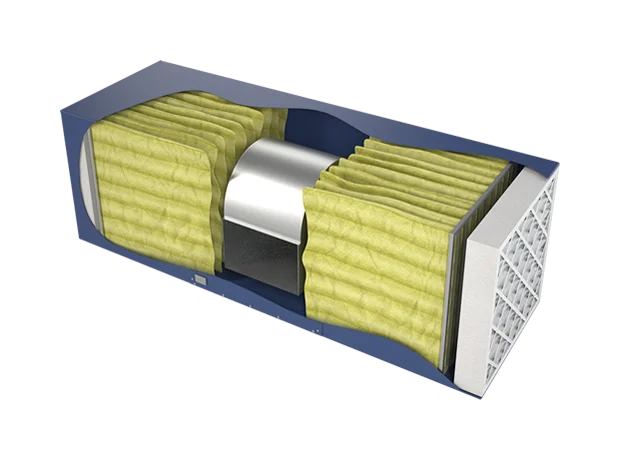
Dual micro-glass filters and T-pattern airflow for wide coverage from one mount.

Explore OX3000
OX3000

OX3000 — Dust & Particulate, High-Bay Buildings Most Popular for Storage

Storage buildings are mostly air. High ceilings and open spans mean coverage per unit matters more than it does in a small room, and the OX3000's T-style airflow pattern — inlets on both sides, exhaust from the center — reaches across a wide footprint from a single mounting point. A dual set of micro-glass fiber filters extends service intervals in buildings where nobody's checking a gauge daily.

Filter Specifications
Dual Micro-Glass Fiber Filters T-Style Airflow — Dual Inlet, Center Exhaust 3/4 H.P. Direct Drive Fan
Airflow: 3,000 CFM  ·  Warranty: 2 years, parts Shop OX3000
Standard Storage
OX2500D
2,000–2,500 CFM
Dust & Particulate

OX2500D

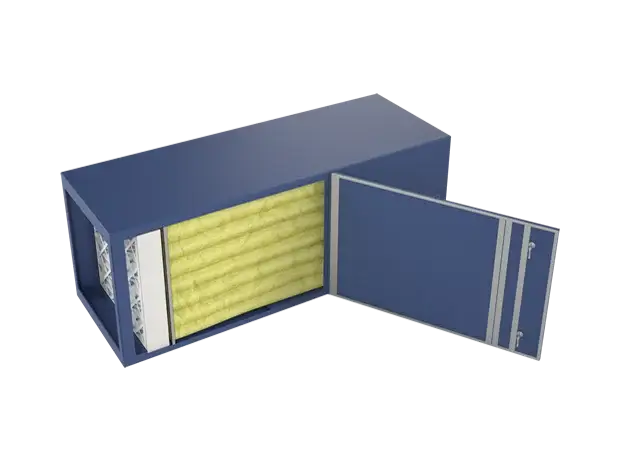
High-CFM dust capture for standard-height storage and staging areas.

Explore OX2500D
OX2500D

OX2500D — Dust & Particulate, Standard Storage

For standard-height storage rooms, staging areas, and smaller buildings where a full high-bay unit is more than the space needs. Positioned near dock doors and traffic lanes, it intercepts dust at the point of entry — the highest-value placement in most storage buildings.

Filter Specifications
Washable Foam Pre-Filter 95% (ASHRAE) High-Capacity Bag Filter
Airflow: 2,000–2,500 CFM  ·  Sound: 48 dBA @ 5' Shop OX2500D
Spore & Contamination Control

For seed storage, certified inventory, and any building where mold risk or cross-contamination between lots carries real cost.

Large Storage
OX2500D-HE
2,000 CFM
Bacteria, Mold, Mildew

OX2500D-HE

High-volume HEPA platform for spore control across large storage areas.

Explore OX2500D-HE
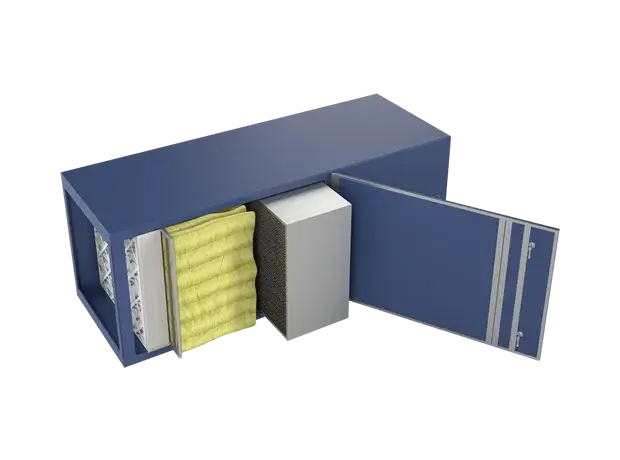
OX2500D-HE

OX2500D-HE — Spore Control, Large Storage

Where inventory is stored long enough for mold to become a real risk, a HEPA stage captures 99.97% of particles at 0.3 microns — well below the size of common fungal spores. This is the configuration for seed storage, certified lots, and organic material held through a full season, delivered at enough airflow to cover a warehouse floor.

Filter Specifications
Washable Foam Pre-Filter 95% (ASHRAE) High-Capacity Bag Filter HEPA Final Filter — 99.97% @ 0.3µ
Airflow: 2,000 CFM  ·  Sound: 48 dBA @ 5' Shop OX2500D-HE
Dedicated Rooms
OX1100-HE
825 CFM
Bacteria, Mold, Mildew

OX1100-HE

HEPA-led build for seed rooms and separated high-value inventory.

Explore OX1100-HE
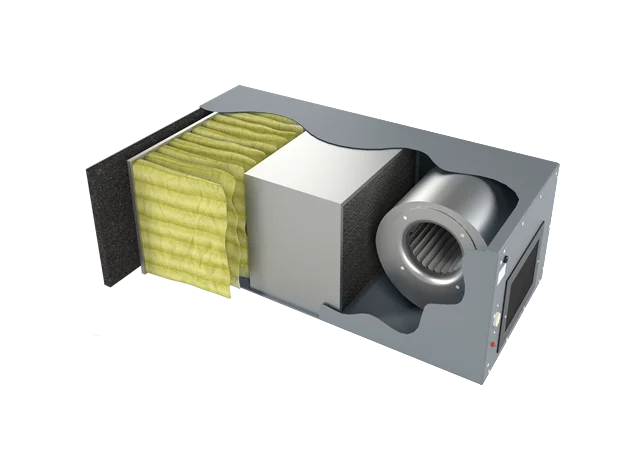
OX1100-HE

OX1100-HE — Spore Control, Dedicated Rooms

Most operations don't need HEPA across the whole building — they need it over the inventory that matters. Seed rooms, breeding stock, certified lots, and separated high-value material are usually a fraction of the floor space, and a room-sized unit protects them without the cost of filtering the entire warehouse to the same standard.

Filter Specifications
20×15×1" 35% Washable Foam Pre-Filter 95% (ASHRAE) Pocket Bag Filter HEPA Final Filter — 99.97% @ 0.3µ
Airflow: 825 CFM  ·  Sound: 48 dBA @ 5' Shop OX1100-HE
Dust & Odor

For enclosed rooms holding feed, fertilizer, treated seed, or chemical inputs where odor concentrates alongside dust.

Enclosed Rooms
OX1100-CF
950–1,100 CFM
Dust Odor

OX1100-CF

Bag filter plus a 6 lb. carbon after-filter for particles and odor together.

Explore OX1100-CF
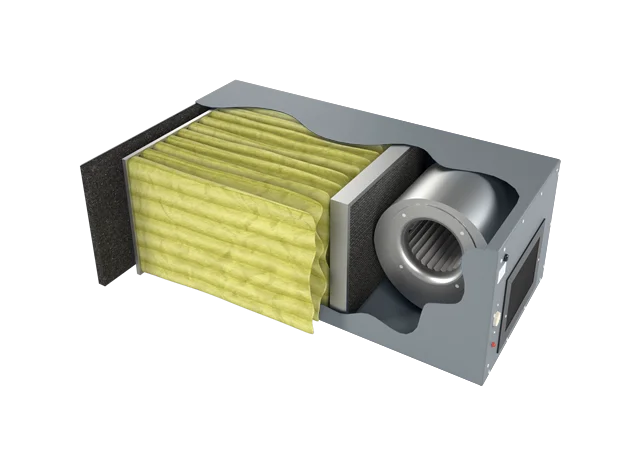
OX1100-CF

OX1100-CF — Dust & Odor, Enclosed Rooms

Feed, fertilizer, and treated inputs held in a closed room build odor with nowhere to go, and staff pulling stock notice it first. A shortened bag filter makes room for a 6 lb. carbon after-filter, handling particulate and odor compounds in one ceiling-hung unit sized to the room.
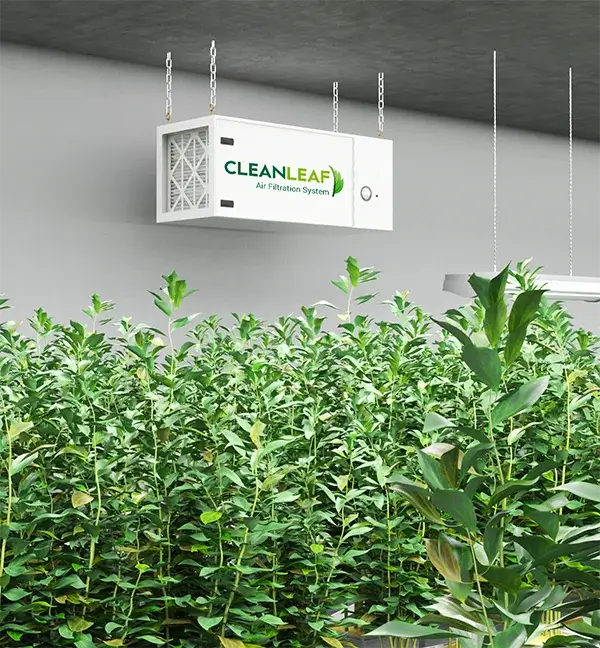
Filter Specifications
20×15×1" 35% Washable Foam Pre-Filter 20×15×24" 95% (ASHRAE) 6 Pocket Bag Filter 6 lb. Carbon After-Filter
Airflow: 950–1,100 CFM  ·  Sound: 48 dBA @ 5' Shop OX1100-CF

Other Agricultural Applications

Storage is one part of the operation. CleanLeaf covers air quality across growing, processing, and livestock environments too.

Growing & Indoor Farming

Mold, powdery mildew, and dust control for controlled grow environments — protecting plant vitality and yield potential.

Explore Now

Material Processing

Sorting, trimming, and packaging areas where dust and fibers threaten product integrity and regulatory air standards.

Explore Now

Enclosed Livestock

Dust, dander, ammonia, and odor control for enclosed barns — supporting animal respiratory health and worker comfort.

Explore Now

Quick Answers to Common Questions

Find quick answers to the most common questions about our services, solutions, and process.

See All FAQs

Air filtration system selection depends on:
• Room size (cubic footage)
• Air changes per hour (ACH)
• Type of contaminants (dust, smoke, mold, odors, VOCs)
• Required filtration level (bag filter %, carbon weight, HEPA, etc.)

Our team evaluates airflow dynamics and contaminant load to recommend a properly sized solution — not just a box with a fan.

Most CleanLeaf and Blue Ox models operate between ~48–66 dBA, depending on airflow setting and unit size.

Lower-speed settings and optional silencers are available for sound-sensitive environments.

Most units are plug-and-play on standard 115V power and include suspension or bracket mounting options.

For larger commercial or industrial applications, we may recommend airflow planning to optimize circulation patterns.

Filter life varies by environment and contaminant load. Typical ranges:
• Pre-filters: 1–3 months
• Carbon media: 6–12 months
• HEPA or high-efficiency bags: 6–18 months

Higher particulate or odor loads may shorten intervals.

Our systems are engineered to capture and control:
• Dust
• Smoke
• Mold and Mildew
• Odors and VOCs
• Fine particulate

Filtration stages may include pleated pre-filters, high-efficiency bag filters, HEPA media, and activated carbon depending on the application.

CleanLeaf offers a 2-year warranty covering defects in materials and workmanship for authorized distributors and end users.

To make a claim, you must get approval first. Approved claims are resolved with a replacement or credit/refund. The warranty is void if the product was misused or used outside its intended purpose.

We also provide ongoing support and access to replacement filters.

Product or System Quote Request

If you would like to speak with one of our product experts about our products, pricing, or to get a system estimate, please call or email us using the contact information below. If you want pricing for a specific product or would like to be contacted by a product expert, please use the Request a Quote Form. If you need support with an existing order, please visit the Contact Us page.

Call Us:
866-999-9008
Fax:
(866) 422-4099
Email:
info@cleanleaf.com

Request a Quote

Please share a few details below, and a product expert will contact you promptly. To accelerate the process, please provide as much detail about our application as possible (EX: type of contaminant (dust, odor, fumes...), size of your space, ceiling height...).